8 Overlooked Car Maintenance Services That Will Save Your Engine
You change your oil and rotate your tires. But what about the rest of your car? These 8 overlooked services can prevent expensive breakdowns.
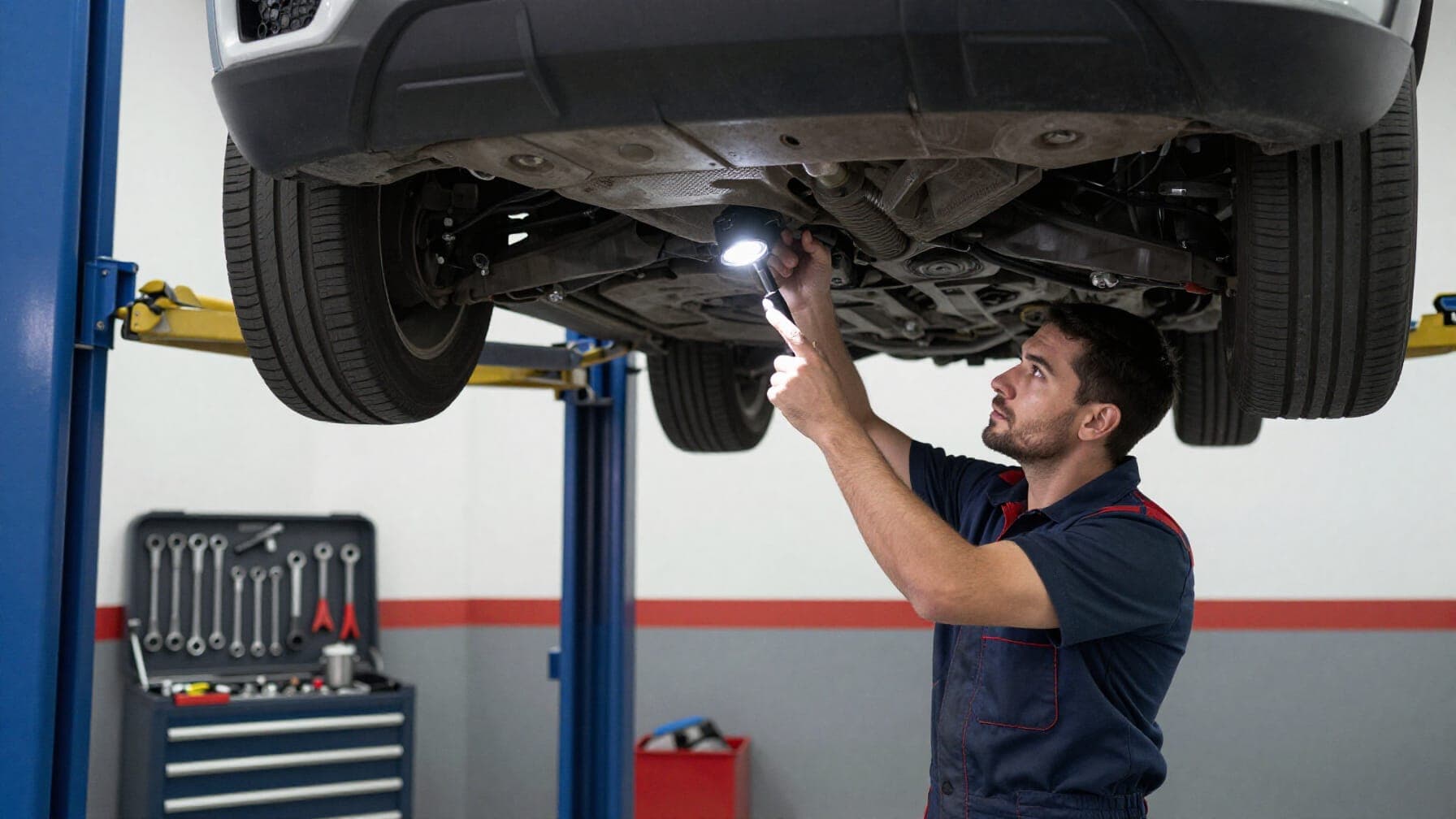
A mechanic inspecting the underside of a car on a lift
8 Overlooked Car Maintenance Services That Will Save Your Engine
You change your oil. You rotate your tires. You feel good about yourself. But while you were patting yourself on the back, your transmission was quietly dying. Your differential was grinding itself to dust. Your brake fluid was slowly turning into a corrosive soup.
Most drivers are diligent about the basics, but they often ignore a whole second tier of vital maintenance. These services don't get the attention they deserve. They aren't glamorous. They aren't flashy. But they are the difference between a car that lasts 100,000 miles and one that lasts 300,000.
This guide covers eight overlooked services that can prevent expensive breakdowns and add years to your vehicle's life.
Transmission Fluid Change
Your transmission is one of the most expensive components in your car. Rebuilding one can cost over $2,000. But most drivers forget about it until the car starts shifting hard or slipping.
The problem is that many automakers advertise "fill-for-life" transmission fluid. The unspoken truth is that "life" often means "life of the warranty." Once the warranty expires, you are on your own.
If you tow anything, drive in stop-and-go traffic, or own an older vehicle, changing your transmission fluid is even more critical. The fluid breaks down over time, losing its ability to lubricate and cool the internal components.
What to do: Check your owner's manual for the recommended interval. For some newer vehicles, a simple drain and fill is preferred over a high-pressure flush.
DIY or Pro? Leave this one to a professional. It can be messy and requires the right tools.
Differential Service
The differential is the component that transfers power from the transmission to the wheels. It is often "out of sight, out of mind," but it is critical for your vehicle's performance.
If you drive an all-wheel-drive, four-wheel-drive, or rear-wheel-drive vehicle, your differential needs periodic service. The gear oil inside it breaks down over time, especially if you tow or haul heavy loads.
Some automakers have actually reduced the amount of gear oil in differentials to save weight and improve fuel economy. That means the oil is working harder and needs to be changed more often.
What to do: Replace the differential oil according to your owner's manual. If you have a limited-slip differential, you may also need a friction modifier additive.
DIY or Pro? This is another one best left to a professional.
Radiator and Cooling System Flush
Nearly 40 percent of engine failures can be traced to cooling system issues. That is a staggering number.
Over time, coolant can become acidic. It can corrode metal parts and form sludge that blocks the radiator. Once the anti-corrosion additives deplete, your engine becomes vulnerable to overheating and catastrophic failure.
The good news is that this is a simple, preventative service. It just happens to be one that most people ignore.
What to do: A common interval is every 30,000-50,000 miles or every 2-5 years. Avoid old-school "green" coolant. Use a high-quality organic-acid (OAT) antifreeze that is compatible with your vehicle.
DIY or Pro? You can do this yourself with a flush kit and some patience, but a professional has the equipment to do it more thoroughly.
Brake Fluid Change
Here is something many drivers don't know: brake fluid is hygroscopic. That means it absorbs moisture from the air over time.
Water in the brake fluid lowers its boiling point. That can lead to spongy brakes and, in extreme cases, brake failure during hard braking. The moisture can also corrode the internal components of your braking system, leading to expensive repairs.
Most manufacturers recommend changing brake fluid every two years. It is a small investment for the safety of you and your passengers.
What to do: Change DOT 3 fluid every time you change your brake pads to avoid moisture buildup and corrosion. If you drive in a humid climate, you may need to do it more often.
DIY or Pro? This requires special tools and bleeding the system. Unless you have experience, it is best left to a professional.
Power Steering Service
If you have ever heard a high-pitched whine from your power steering pump, you know the sound of trouble. The fluid breaks down over time, accumulating contaminants and moisture that can damage the pump and steering rack.
Not all modern vehicles have hydraulic power steering. Many have switched to electric power steering, which does not require fluid. But if you have a hydraulic system, it needs periodic service.
What to do: Check your owner's manual for the recommended interval. If the fluid is dark or smells burnt, it is time for a change. When you flush the system, always use the correct fluid specified by the manufacturer.
DIY or Pro? A flush is messy and requires the right tools. A professional can do it quickly and safely.
Fuel Injector Cleaning
This is a service that is often oversold by dealerships. But that doesn't mean it is never necessary.
Over time, deposits can form on fuel injectors, reducing power and fuel economy. This is especially a problem in direct-injection engines, where the injectors are exposed to higher temperatures.
However, modern gasoline contains detergents that do a decent job of keeping fuel systems clean. If your car is running fine, you probably do not need this service.
What to do: Only consider fuel injector cleaning if you notice a reduction in power, throttle response, or fuel economy. As a preventative measure, you can treat your fuel with a high-quality fuel system cleaner like Techron or AMSOIL P.i. every few thousand miles.
DIY or Pro? You can easily add a fuel system cleaner to your gas tank yourself. If you want a professional cleaning, a shop can do it with specialized equipment.
PCV Valve Replacement
This is one of the easiest and cheapest parts to replace, and it is almost always forgotten.
The PCV (Positive Crankcase Ventilation) valve is a small component that regulates the flow of gases from the engine crankcase back into the intake manifold. When it gets stuck, it can increase oil consumption and reduce fuel efficiency.
The good news is that it is cheap and easy to replace. It is typically located on top of the valve cover and costs just a few dollars.
What to do: Remove the valve and shake it. If it rattles, it is working. If it does not rattle, replace it. You can usually find a replacement for under $10.
DIY or Pro? This is an easy DIY job. With a basic socket set and a few minutes, you can do it yourself.
Spark Plug Replacement
Dirty or worn spark plugs can fail to ignite the fuel-air mixture, wasting power and reducing fuel efficiency. It is a simple problem with a simple solution.
The type of spark plug you have determines how often it needs to be replaced. Copper plugs may need replacement every 25,000-30,000 miles, while platinum or iridium plugs can last 60,000-100,000 miles or more.
What to do: Check your owner's manual for the recommended interval. You can often spot a problem if you experience rough idling, sluggish acceleration, or a noticeable drop in gas mileage.
DIY or Pro? This is a great beginner DIY job. A spark plug socket set and a torque wrench are the only special tools you need.
The Art of Smart Maintenance
Skipping maintenance is a gamble. A $100 service can prevent a $2,000 repair. It is that simple.
A full service history also protects the resale value of your vehicle. When it comes time to sell, a well-maintained car will command a higher price. Buyers are willing to pay a premium for a car that has been properly cared for.
The best guide is your owner's manual. When in doubt, trust the manual, not a sales pitch. The manufacturer knows your vehicle better than anyone else.
Modern cars are computers on wheels. They need proper care to stay reliable. But with a little attention to the details, you can keep your car on the road for years to come.
You might also like:
- Why Maintenance Matters: The Science of Keeping Your Car on the Road
- The Great Affordability Crisis: Why Car Ownership is Becoming a Luxury
- Beat the Heat: Your Ultimate Summer Car A/C Guide for 2026
Disclaimer: This article is for informational purposes only. Always consult your vehicle's owner's manual and a qualified mechanic for specific maintenance advice. The author assumes no responsibility for any damage caused by DIY repairs.
Drift Team
Automotive maintenance experts