Why Maintenance Matters: The Science of Keeping Your Car on the Road
Behind every worn-out engine is a skipped oil change. Here's the science behind why your car needs regular care.
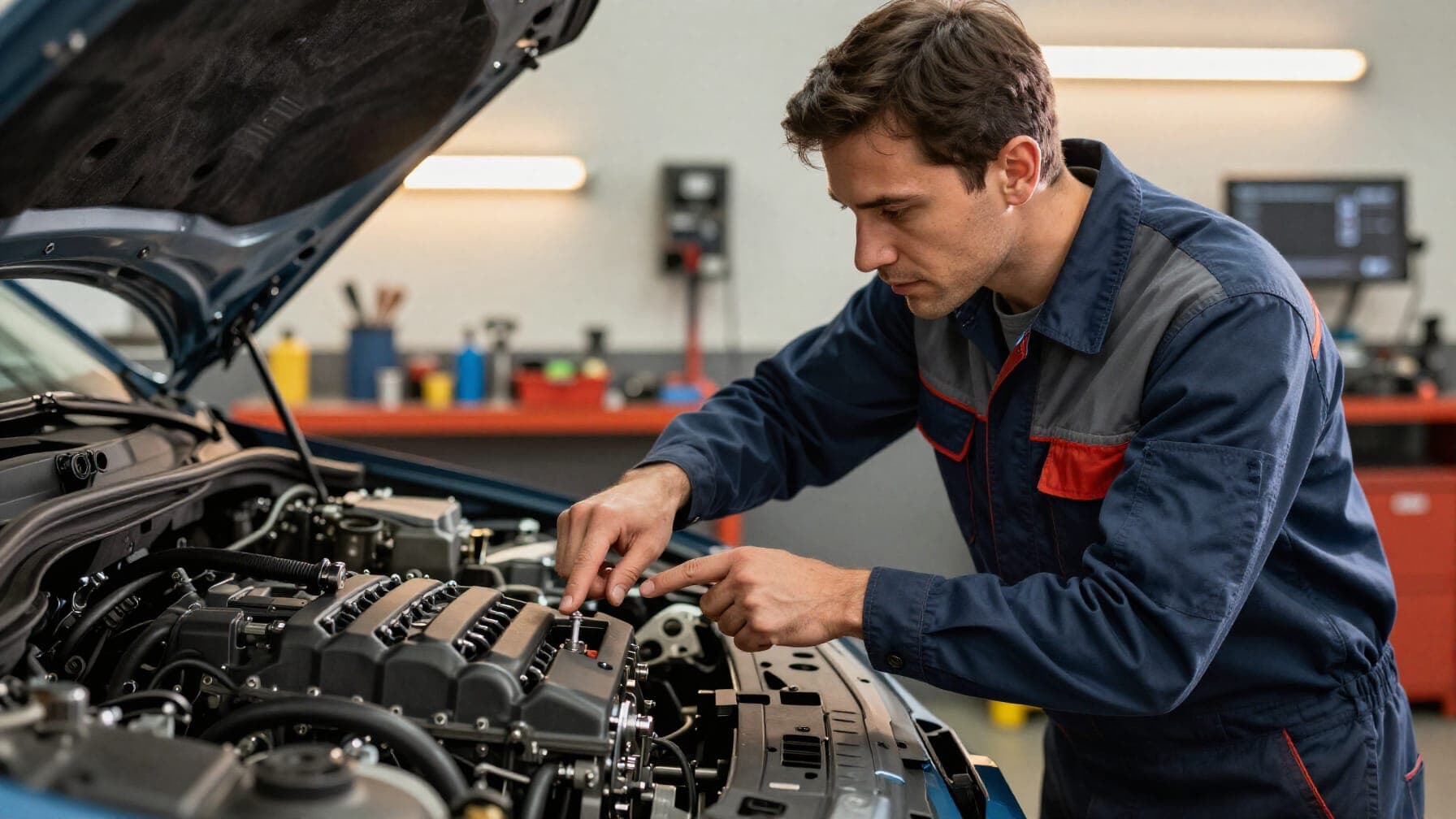
A mechanic inspecting a car engine in a well-lit garage
Why Maintenance Matters: The Science of Keeping Your Car on the Road
A few years ago, a friend of mine told me about the time his engine seized on the highway. He had been putting off an oil change for months. He knew it was overdue. He just didn't think it would matter that much.
When he finally got the car to a mechanic, the diagnosis was brutal: the engine was completely destroyed. The oil had turned to sludge. Metal parts had been grinding against each other without lubrication. The repair bill was over $6,000. A $120 oil change could have prevented everything.
This story isn't unique. Cars are complex machines, and they need regular care to keep running. But here's the thing: most people don't really understand why maintenance matters. They just know they're supposed to do it.
In 2025, the average number of annual dealership service visits for vehicles aged 4 to 12 years hit 1.8, up from 1.5 in 2022. That was the highest level recorded in four years. People are finally taking maintenance more seriously. But the question remains: why does it matter so much?
The Physics of a Spinning Engine
Let's start with something simple. When you drive at 60 km/h, your engine is spinning at about 2,500 revolutions per minute. That means for every kilometre you drive, your engine makes about 2,500 revolutions.
Over 200,000 kilometres, that adds up to 500 million revolutions.
Think about that number for a second. Half a billion times, the pistons move up and down. Half a billion times, metal parts slide against each other. Half a billion times, your engine relies on a thin film of oil to keep everything from grinding to a halt.
A car engine lasting 200,000 kilometres is a testament to what oil can do. If even one atom of metal wore off each surface per revolution, the engine would lose about 15 centimetres of material. But it doesn't. Oil prevents that wear.
Oil is not just a fluid. It is the barrier between your engine and destruction.
The Cost of Skipping the Basics
Here is the cold hard truth: a $120 oil change beats a $10,000 engine replacement.
Skipping oil changes causes carbon to build up on engine valves. This reduces fuel mileage and costs money to fix. Running on old oil creates more friction, which damages the engine and lowers gas mileage.
But oil changes are just one piece of the puzzle. Let's look at what happens when drivers ignore other maintenance tasks.
What Drivers Are Ignoring (and What It Costs Them)
| Mistake | Consequence | Approximate Cost |
|---|---|---|
| Ignoring the check engine light | Catalytic converter failure | $1,300 |
| Skipping oil changes | Engine replacement | $5,000–$10,000 |
| Neglecting tires | Blowout, suspension damage | Hundreds to thousands |
| Delaying brake service | Rotor replacement, accidents | $1,500+ |
| Neglecting coolant flushes | Engine block replacement | $6,000 |
These numbers are not scare tactics. They are real costs that real people pay every day.
The Warning Lights You Should Never Ignore
A study of 2,530 drivers found that dashboard symbols with pictures were easier to understand. But some symbols, like tire pressure, traction, and power steering warning lights, were poorly understood. And here is the troubling part: drivers who did not understand those symbols were significantly less likely to do preventive maintenance.
Here is a quick breakdown of what those lights actually mean:
Yellow or orange lights are early warnings. You need to pay attention soon, but the car is not in immediate danger.
Red lights are emergencies. You need to stop driving as soon as it is safe.
A flashing oil pressure light means something is seriously wrong with the engine's oil system. Ignoring it can lead to total engine failure.
The most common check engine light is a minor emissions issue, often a loose gas cap. But without a scan tool, you cannot be sure. And if you ignore it, a small problem can turn into a big one. A loose gas cap that is left untightened can eventually trigger a much more serious (and expensive) evaporative emissions system failure.
Why People Are Turning to DIY Repairs
A 2025 report from TOPDON and Statista revealed that more people are doing their own car repairs. The numbers are striking.
- 97% of current DIY tool users can spot issues faster.
- 94% have a better understanding of their vehicles.
- 93% have avoided unnecessary technician visits.
Why is this happening? There are a few reasons.
First, repair costs are rising. Second, vehicles are aging. There are now 20 million more vehicles on the road that are in the "sweet spot" for maintenance than there were in 2020. Third, even higher-income households are getting into DIY. The largest growth in DIY maintenance is coming from households earning $100,000 or more.
But there is a catch. 67% of people who are interested in DIY repairs say they lack the knowledge to do them.
One of the key drivers of the DIY trend is online resources. More than one-third of DIYers use YouTube to learn how to fix their cars. The DIY community is also benefiting from increasingly advanced and affordable diagnostic tools. With a scan tool that connects to a smartphone, a driver can now read and clear their own error codes.
The Environmental Angle
Maintenance is not just about your wallet. It is also about the planet.
A study that looked at the entire life cycle of a Ford Focus found something interesting. When researchers used more detailed data, they found that maintenance and repair had a much bigger environmental impact than earlier studies had suggested.
For petrol cars, the effect was 58% higher. For diesel cars, it was 95% higher.
Here is the key finding: frequent replacement of engine oil reduces the benefits of new technologies in diesel engines. In other words, modern engines that are designed for efficiency actually need better maintenance to deliver on their environmental promises.
A single car may need 13 oil changes, 3 batteries, and 13 tires over its lifetime. Each of those parts requires resources to make, ship, and dispose of. Maintenance is not just about keeping your car running. It is about keeping it running efficiently, which reduces waste and pollution.
The Science of Everything
Behind every component in your car is a law of physics.
Hooke's Law applies to suspension springs and brake systems. The principle of elasticity determines how components respond to stress. When you hit a pothole, your suspension springs compress and then rebound. That is Hooke's Law in action.
Transformation of Kinetic Energy is what happens when you brake. The car's motion is converted into heat. The brake pads get hot. The rotors get hot. Understanding this process is crucial to appreciating why brake pads wear out and why heat dissipation matters.
Pascal's Law of Hydraulics explains how brake fluid works. It distributes hydraulic pressure throughout the braking system. The properties of brake fluid—its viscosity, its boiling point, how easily it absorbs moisture—are critical to safe braking.
Friction is the enemy of efficiency. Only about 20% of the energy from fuel actually moves the car. The rest is lost to friction, heat, and other inefficiencies. Good maintenance reduces friction, which improves fuel economy and extends engine life.
The CAA-Approved Checklist
Here is a simple maintenance checklist from CAA-approved mechanics.
What you should do:
- Follow the manufacturer's maintenance schedule.
- Address problems as soon as they arise.
- Take warning lights seriously, even if the car seems fine.
- Listen for noises. Grinding, squeaking, or banging usually means something is wrong.
- Check for oily stains under your car. That could mean a leak in the power steering, brakes, or transmission.
- Respond to manufacturer recall notices.
- Keep tires properly inflated and rotated.
- Have your vehicle inspected twice a year, in spring and fall.
- Build a relationship with a trusted mechanic.
What you should not do:
- Procrastinate on recommended maintenance.
- Ignore warning lights. They are not suggestions.
- Ignore strange smells. A sweet smell means coolant is leaking. A burning smell means a fluid leak or a belt that is slipping.
- Drive on worn or under-inflated tires.
- Buy your own car parts online. You may void labour warranties, and you might get the wrong part.
The Bottom Line
Maintenance is not an expense. It is an investment.
Your car is a machine with moving parts. Friction and wear are inevitable, but they are manageable. A car that gets regular maintenance can easily last 300,000 kilometres. A car that is neglected might not make it to 100,000.
Understanding the science behind your car empowers you to make better decisions. When you know why an oil change matters, you are more likely to get it done. When you know what a warning light means, you are less likely to ignore it.
The shift toward DIY maintenance is growing, but knowledge gaps remain. If you are thinking about working on your own car, start small. Change your own oil. Check your own tire pressure. Learn how to use a scan tool. There are thousands of tutorials online, and the sense of accomplishment is worth it.
If you prefer to leave it to the professionals, that is fine too. Just make sure you are building a relationship with a mechanic you trust. Ask questions. Learn from them.
Because in the end, the best way to keep your car on the road is to understand what it needs and why.
You might also like:
- The Great Affordability Crisis: Why Car Ownership is Becoming a Luxury
- Why New Drivers Are More Scared of Car Maintenance Than Anything Else
- The 10 Most Controversial Cars Ever Made — And Why They're Still Loved
Disclaimer: This article is for informational purposes only. Always consult your vehicle's owner's manual and a qualified mechanic for specific maintenance advice. Prices and data are approximate and may vary.
Drift Team
Automotive maintenance and engineering experts