The Rise of Megacasting: How One Manufacturing Technique Is Reshaping the Auto Industry
Tesla replaced 171 parts with two castings and eliminated 1,600 welds. Now Ford, Volvo, and the entire industry are following suit.
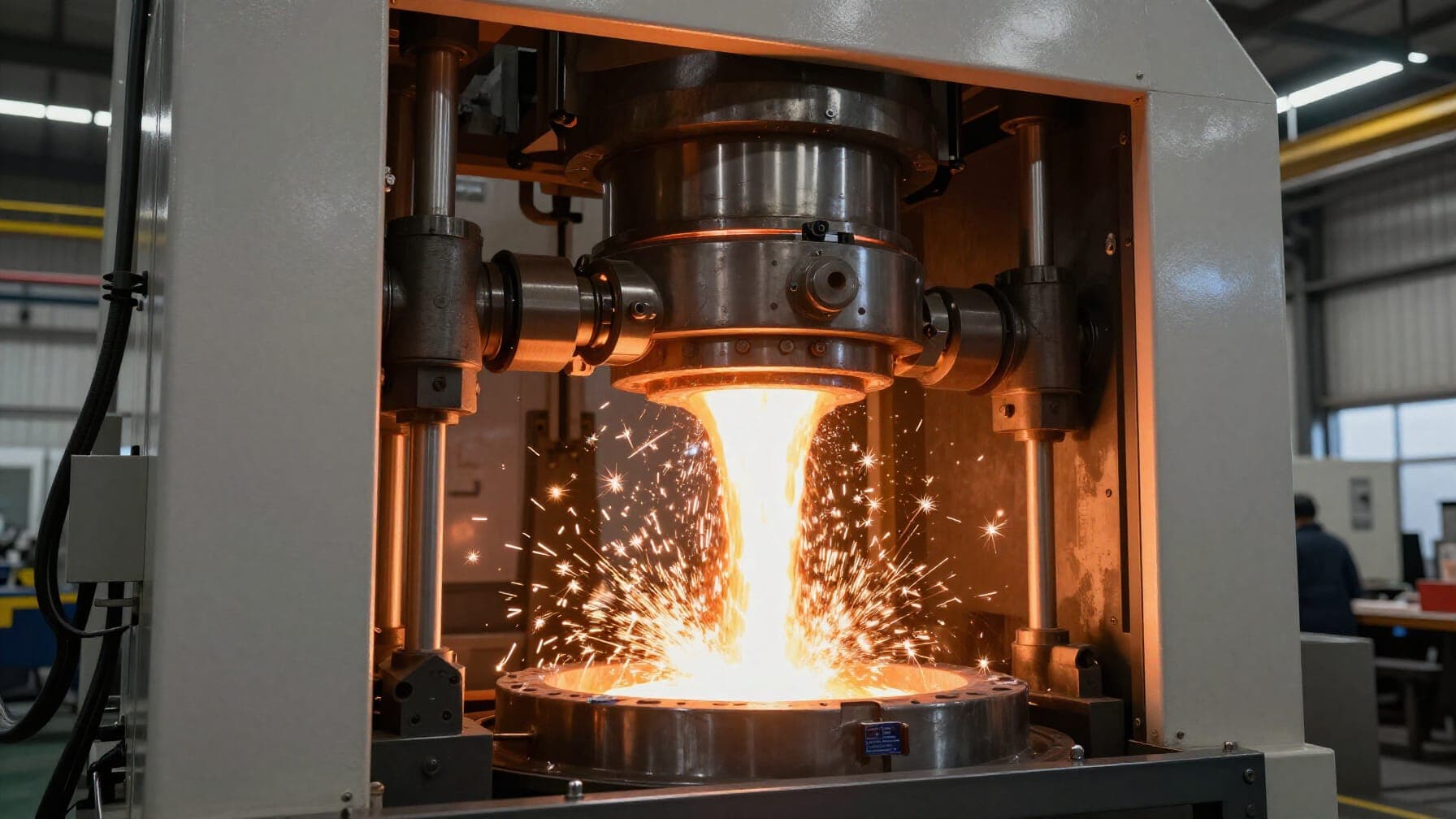
A massive Giga Press machine in a modern automotive factory, pouring molten aluminum into a die
The Rise of Megacasting: How One Manufacturing Technique Is Reshaping the Auto Industry
Imagine replacing 171 separate metal pieces with just two. Imagine eliminating 1,600 welds from a single vehicle. Imagine cutting assembly time by 15% and labor costs by 40%.
This isn't science fiction. It's megacasting—and it's quietly reshaping the automotive industry.
What Is Megacasting?
Megacasting is the process of using enormous high-pressure die-casting machines to create single, massive structural components. Instead of stamping dozens of separate pieces and welding them together, you cast the entire structure as one piece.
These "Giga Presses" weigh thousands of tonnes and exert clamping forces between 6,000 and 12,000 tonnes. A single machine represents an investment of approximately $18-25 million. The largest machines, supplied by IDRA and Bühler Group, can produce parts up to 5 meters long and weighing 500 kg.
Megacasting becomes economically viable only at scales exceeding 100,000 units annually per casting die. For manufacturers with diverse model portfolios and lower individual volumes, the math becomes less favorable. That is why this technology is currently the domain of high-volume manufacturers.
"This isn't a revolution that wipes out incumbents. It's an architectural shift that redistributes work."
The Numbers That Matter
Tesla pioneered the technology with the Model Y. The rear structure of a Model 3 was made of 171 separate metal pieces. On the Model Y, that same structure is just two megacast components. The result: 1,600 welds eliminated and 300 robots removed from the assembly line.
The cost savings are staggering. Tesla reduced manufacturing costs for the Model Y's rear underbody by 40%. Cycle time dropped from 120 minutes to just 80-90 seconds. Production rates reached 40-45 castings per hour.
Ford is now adopting the approach, calling it "unicasting." Their next-generation manufacturing with large unicast components enables 20% fewer parts, 25% fewer fasteners, 40% fewer workstations, and 15% faster assembly time. Ford plans to condense 146 structural parts into just two unicastings.
Volvo is also joining the party. Their EX60 will replace approximately 100 stamped parts with a single cast part for the rear chassis. The result: a 15-20% section weight reduction and 95% material utilization through in-house recycling of casting scrap.
Tesla
171 → 2
Parts Reduction
Ford
146 → 2
Parts Reduction
Volvo
100 → 1
Parts Reduction
The Expanding Constellation of Adopters
Tesla was the pioneer, but the technology has spread rapidly across the industry.
| OEM | Region | Press Size | Production Start |
|---|---|---|---|
| Tesla | NA, EU, CN | 6,000 & 9,000 ton | 2020 |
| Ford | NA | 6,100 & 9,300 ton | 2027 (planned) |
| Volvo | EU | 8,400 & 9,000 ton | 2026 (planned) |
| Volkswagen | EU | 4,400 ton | Delayed to 2032 |
| Toyota | JP | Large-scale | Concept/Demo |
| Hyundai | KR | Not disclosed | Planned |
| Honda | NA, CN | 6,100 & 12,000 ton | Planned |
| XPeng | CN | 6,800 & 12,000 & 16,000 ton | 2021 |
| NIO | CN | 6,800 & 8,800 ton | 2022 |
| BYD | CN | 9,000 ton | 2026 (planned) |
Chinese manufacturers have been particularly aggressive in adopting megacasting. XPeng, NIO, Geely, AITO, Xiaomi Auto, ChangAn, and Chery all have megacasting programs in production. Some are using presses up to 16,000 tonnes, and Neza is even exploring 20,000+ tonne presses for research and development.
The Challenges
Capital Intensity
A single Giga Press costs $18-25 million, excluding tooling and facility modifications. The breakeven point requires high-volume production, typically exceeding 100,000 units annually. This favors large OEMs and suppliers with the balance sheet strength to invest.
Repairability
Megacast structures are more difficult to repair than traditional welded assemblies. Instead of replacing a small section, repairers may need to section and replace larger cast components. The repair process often uses adhesives, rivets, and bolts rather than traditional welding.
However, research comparing a megacast Model Y with a conventional Model 3 found that certain repairs on the cast structure came in cheaper when done correctly.
Quality Control
Casting defects like porosity and distortion remain significant challenges. Thin walls can lead to distortion, scrap, and inconsistent properties. Dimensional control is critical because monolithic cast structures are less compliant than welded assemblies.
Supply Chain
Consolidation is occurring among casting suppliers, favoring those with the technical capabilities and capital to support large-format structural casting. Nemak's acquisition of GF Casting Solutions' Automotive business for $336 million exemplifies this trend.
"The frontier has shifted from making the monolith bigger to making the interfaces smarter."
The Future: Gen-3 Modular Megacasting
The technology is evolving rapidly. The die casting market is projected to reach $126.86 billion by 2031, growing at a 5.6% CAGR.
Gen-1: Proved the concept but revealed pain points—thin walls, distortion, scrap, limited repairability.
Gen-2: Chinese OEMs absorbed the lessons—section thickness increased, alloys tuned for stability, repair pathways improved.
Gen-3: Modular megacasting—combining large cast nodes with extrusions and sheet reinforcements. The goal is balanced architecture: better crash management, faster rework, shorter lines, and more practical service.
The frontier has shifted from making the monolith bigger to making the interfaces smarter. The winners will be those who master the interfaces between cast nodes, extrusions, and sheet structures.
A Quiet Revolution
Megacasting is not just a manufacturing technique. It is a fundamental rethinking of how cars are built. It represents a shift from assembling hundreds of components to casting them as single pieces.
This isn't a revolution that wipes out incumbents. It's an architectural shift that redistributes work. It favors suppliers that align precision casting with smart assembly integration and repair logic.
The question isn't if megacasting will reshape the industry, but how quickly and who will lead the transition.
You might also like:
- Why Maintenance Matters: The Science of Keeping Your Car on the Road
- The Great Affordability Crisis: Why Car Ownership is Becoming a Luxury
- EV Sales Surge in Canada as Gas Prices and Incentives Drive Demand
Disclaimer: This article is for informational purposes only. Data and projections are subject to change.
Drift Team
Automotive manufacturing and technology analysts