Solid-State Batteries Are Finally Here: What the New Global Standard Means for Your Next EV
China has secured approval for the world's first international standard for solid-state batteries. Here is what it means for the future of electric vehicles, when you can expect solid-state EVs, and why you should not wait to buy.
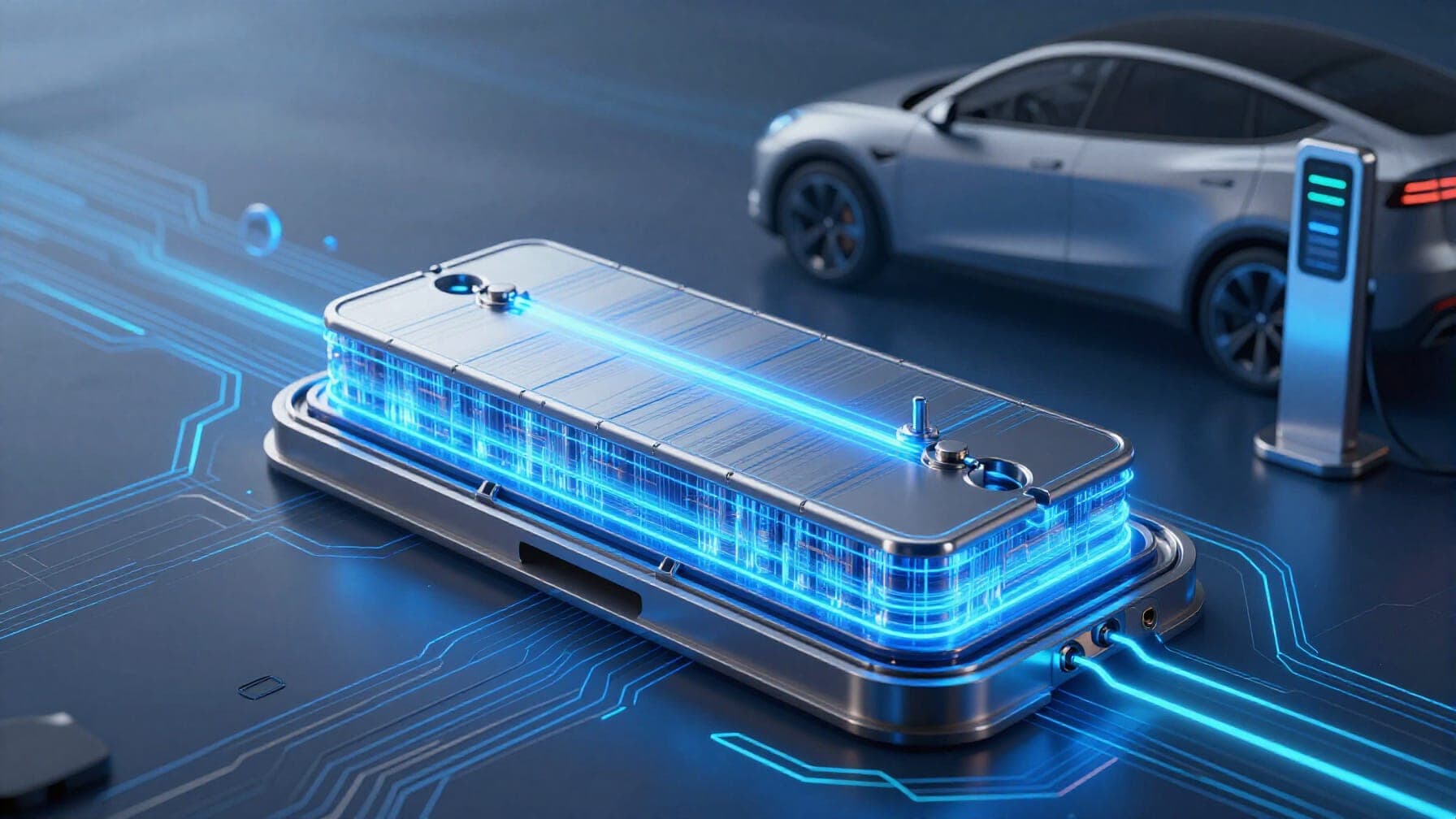
A futuristic cross-section of a solid-state battery cell glowing with blue energy, with an EV silhouette in the background
For years, solid-state batteries have been the holy grail of electric vehicle technology. They promise longer range, faster charging, and better safety than today's lithium-ion batteries. The running joke has been that they are always three years away.
That is finally starting to change. On August 21, 2026, the International Electrotechnical Commission (IEC) approved the world's first international standard for solid-state batteries. The proposal was led by China, with experts from France, South Korea, and Japan participating in its development.
This is a significant milestone. The standard creates a unified "yardstick" for global automakers developing solid-state batteries. It will accelerate the arrival of safer, longer-range EVs. But it also raises important questions. When will solid-state EVs actually reach consumers? Should you wait to buy an EV? And what does this standard actually do?
This article answers all those questions and more.
What Are Solid-State Batteries?
Before diving into the standard, it is helpful to understand what solid-state batteries actually are and why they matter.
Today's electric vehicles use lithium-ion batteries with a liquid electrolyte. This liquid allows lithium ions to move between the anode and cathode during charging and discharging. But liquid electrolytes have limitations. They can degrade over time, limit charging speed, and pose fire risks.
Solid-state batteries replace that flammable liquid with a solid material. This solid material, known as a solid-state electrolyte, can be made from ceramics, polymers, or glass. The change is simple in concept but revolutionary in practice.
The Key Advantages
| Feature | Solid-State Batteries | Current Lithium-Ion |
|---|---|---|
| Energy Density | 400-500 Wh/kg (projected) | 250-300 Wh/kg |
| Charging Time (10-80%) | 10-15 minutes | 30-45 minutes |
| Safety | Non-flammable electrolyte | Thermal runaway risk |
| Lifespan | 15-20 years | 5-8 years |
| Operating Temperature | -20°C to 60°C | -20°C to 45°C |
Energy Density: Solid-state batteries can pack significantly more energy into the same space. This translates directly to longer driving range. Toyota's first all-solid-state EV, expected around 2027-2028, is targeting more than 600 miles of range.
Charging Speed: By removing the liquid and using stable solid materials, manufacturers can safely push more electricity into the battery at once. Solid-state models can cut charging time to 12 minutes, and in some cases, as little as three minutes.
Safety: Liquid electrolytes are flammable. In a severe crash, they can catch fire. Solid electrolytes are not flammable, virtually eliminating the fire risk that has plagued some EV models.
Lifespan: Conventional lithium-ion batteries typically begin to show noticeable degradation after approximately 5-8 years of use in electric vehicles. Solid-state batteries could remain functional for 15-20 years or more, depending on usage and environmental factors.
What the New Standard Actually Does
The new IEC standard is officially titled "Secondary lithium-ion batteries for electric vehicle drive - Solid-state battery application guide, test items and conditions".
Before the Standard
Before this standard, there was no unified international framework for testing and evaluating solid-state batteries. Different companies and countries used different testing methods. This made it difficult to compare claims, verify performance, or ensure consistency across the industry.
What the Standard Provides
The standard does several important things:
-
Defines Clear Testing Specifications: It establishes consistent test items and conditions for solid-state batteries. This means that when a company claims its battery has a certain energy density or charging speed, there is a standardized way to verify that claim.
-
Creates a Unified "Yardstick": Global automakers now have a common reference point for developing and producing solid-state batteries. This reduces duplication of effort and accelerates the technology's development.
-
Promotes Technology Sharing: By establishing international standards, the IEC facilitates the sharing of best practices and technical knowledge across borders.
-
Builds Consumer Trust: Standardized testing means consumers can trust the performance claims made by automakers. This is important for the mass adoption of solid-state EVs.
Who Is Involved
The standard was proposed by China, drawing on its substantial solid-state battery research and development experience. Experts from France, South Korea, and Japan participated in its development. This international collaboration is a sign of the technology's global importance.
China's Leadership in Solid-State Batteries
China's role in proposing and leading this standard is not an accident. The country has invested heavily in solid-state battery research and development.
The Numbers
- China publishes the most solid-state battery papers globally, with annual publications growing from 21 in 2015 to 562 in 2023.
- China has surpassed Japan as the largest patent market, accounting for approximately 35% of all solid-state patent filings.
- Chinese electrolyte technology patent applications rank first globally at 39%.
- China is the leading market for solid-state patents, holding 35% of the global share.
The Timelines
China's solid-state battery roadmap is ambitious and clearly defined:
| Phase | Timeline | Target |
|---|---|---|
| First Stage | 2025-2027 | Developing the full technology chain |
| Second Stage | 2027-2030 | Next-gen passenger vehicles at 400 Wh/kg |
| Third Stage | 2030-2035 | Lithium-anode breakthrough at 500 Wh/kg |
Leading Chinese companies are already executing against these timelines. CATL, the world's largest battery manufacturer, is targeting small-scale trial production of its solid-state battery cells in 2027. BYD has also filed patents for solid-state cells and plans to begin small-scale production in 2027.
The companies are aligned on their timelines, although neither has specified an exact month for the start of pilot production.
The Industry Race: Who Is Doing What
China is not alone in the race to commercialize solid-state batteries. Major automakers and battery companies around the world are pursuing the technology with varying degrees of urgency.
Toyota (Japan)
Toyota has invested more than $15 billion in solid-state battery research and holds more solid-state patents than any other company. It received formal production approval in Japan in late 2025. The company is targeting its first all-solid-state EV for 2027-2028, with first-generation cells aimed at more than 600 miles of range and a 10% to 80% charge in under 10 minutes. Those first vehicles will likely debut on premium Lexus models.
QuantumScape (USA)
Backed by Volkswagen, QuantumScape has published some of the strongest verified lab results. Its QSE-5 cells have achieved 844 watt-hours per liter and charging from 10% to 80% in approximately 12 minutes. The company installed equipment for its automated production line in early 2026 and is targeting mass production in the 2027-2028 window.
Samsung SDI (South Korea)
Samsung SDI has demonstrated cells with 900 watt-hours per liter, nearly double current lithium-ion. It is targeting 2027 for limited production, initially for premium vehicles. The company has partnered with BMW and Solid Power to co-develop and validate cells using a sulfide electrolyte. It aims for an 80% charge in approximately nine minutes.
CATL and BYD (China)
As mentioned, both CATL and BYD are targeting 2027 for small-scale trial production. CATL CEO Robin Zeng has cautioned that mass-market adoption of solid-state batteries is years away, with the technology likely to first appear in vehicles priced at 250,000 yuan ($37,000 USD) or above. The company has set the threshold for large-scale production at 1 million vehicles, a figure expected to be unattainable before 2030.
Others
Nissan is targeting a 2028 commercial launch. Mercedes-Benz has road-tested a prototype pack, driving an EQS nearly 750 miles on a charge, but plans commercial introduction only in the early 2030s. Honda is running its own demonstration line with Factorial Energy.
When Will You Actually Buy a Solid-State EV?
The honest answer is: not for several years, unless you are willing to spend a lot of money.
The Phased Rollout
Industry experts expect a phased introduction of solid-state batteries:
-
2027-2028: Premium vehicles only. These will likely be expensive models from luxury brands like Lexus, as well as high-end EVs from Tesla, BYD, and others. Expect price tags well above $50,000.
-
2028-2030: Gradual expansion to more models, but still primarily in premium and mid-range vehicles. Cost remains a significant barrier.
-
2030 and Beyond: Genuine mass-market adoption begins. Solid-state batteries become affordable enough for mainstream EVs.
The Cost Challenge
Every credible timeline points to premium vehicles first. Cost parity with lithium-ion, and therefore affordable solid-state cars, is not expected until around 2030.
CATL has stated that its initial commercial solid-state battery batches will be limited to premium EV platforms and may only see adoption in vehicles priced at $37,000 USD or above. This is because the engineering constraints and manufacturing costs are simply higher for solid-state batteries.
The "Don't Wait" Advice
If you are shopping for an EV in the next few years, solid-state batteries should not make you wait. The first vehicles that use them will be expensive and limited in production. Meanwhile, lithium-ion batteries are more affordable and better than ever.
The technology will trickle down exactly the way lithium-ion once did, from flagships to the mainstream over years. You should buy the EV that makes sense for you now.
The Challenges Ahead
Despite the exciting progress, significant challenges remain before solid-state batteries can reach the mass market.
Interface Stability: The Core Bottleneck
Unlike liquid systems where the electrolyte flows freely, solid-solid interfaces are prone to chemical and mechanical instability. This emerges as the most critical bottleneck across all cell components.
During charging and discharging, electrodes expand and contract. This volume change can cause contact loss at the solid-solid interfaces, leading to capacity fading. This is especially problematic for high-energy cathode materials.
Manufacturing Complexity
Solid-state batteries require inert gas or dry room atmospheres for production. The materials used in solid-state batteries, particularly sulfide-based electrolytes, are moisture-sensitive. This adds significant cost and complexity to manufacturing.
The high reject rate during production, potentially up to 30%, costs millions of dollars per day during industrial ramp-up. Achieving consistent quality at scale remains a major hurdle.
Cost Parity
Solid-state batteries are currently significantly more expensive to produce than lithium-ion batteries. The raw materials, the manufacturing processes, and the lower production yields all contribute to higher costs.
To achieve cost parity, manufacturers will need to develop less expensive materials, improve production efficiency, and increase production volumes. This is expected to take several more years.
The "Solid-State" Marketing Trap
One caution is worth keeping in mind. The term "solid-state" is used loosely, and many announcements actually describe semi-solid cells that still contain a small amount of liquid electrolyte. These are easier to build and are shipping sooner, but they do not deliver the full promised leap in energy density and safety of a true all-solid-state cell.
When you read a timeline, it pays to check which one a company actually means.
Conclusion
The approval of the world's first international standard for solid-state batteries is a genuine milestone. It signals that the technology has moved from the laboratory to the validation stage and is now on a clear path to commercial production.
The unified "yardstick" created by this standard will accelerate the development of solid-state batteries and help ensure that the claims made by automakers are verified and consistent.
But it is important to keep expectations grounded. Solid-state EVs are still years away for most consumers. The first vehicles will be expensive, limited in production, and likely from premium brands. Mass-market adoption is not expected until around 2030.
In the meantime, lithium-ion batteries are better than ever. If you are in the market for an EV, do not wait. The current technology is more than capable of meeting your needs.
The future is solid-state. But the present is still lithium-ion, and that is perfectly fine.
You might also like:
- EV Sales Surge in Canada as Gas Prices and Incentives Drive Demand
- Top 10 Cars That Should Have Been Electric
- 2026 Toyota Camry vs. Kia K5 Comparison
Disclaimer: This article is for informational purposes only. Prices, specifications, and timelines are subject to change. Always verify with official sources before making a purchasing decision.
Drift Team
EV technology experts and industry analysts