The Forgotten Gem: Mazda MX-6
Overshadowed by the Miata and RX-7, the Mazda MX-6 was a car that did everything well but nothing spectacularly. Thirty years later, it deserves a second look.
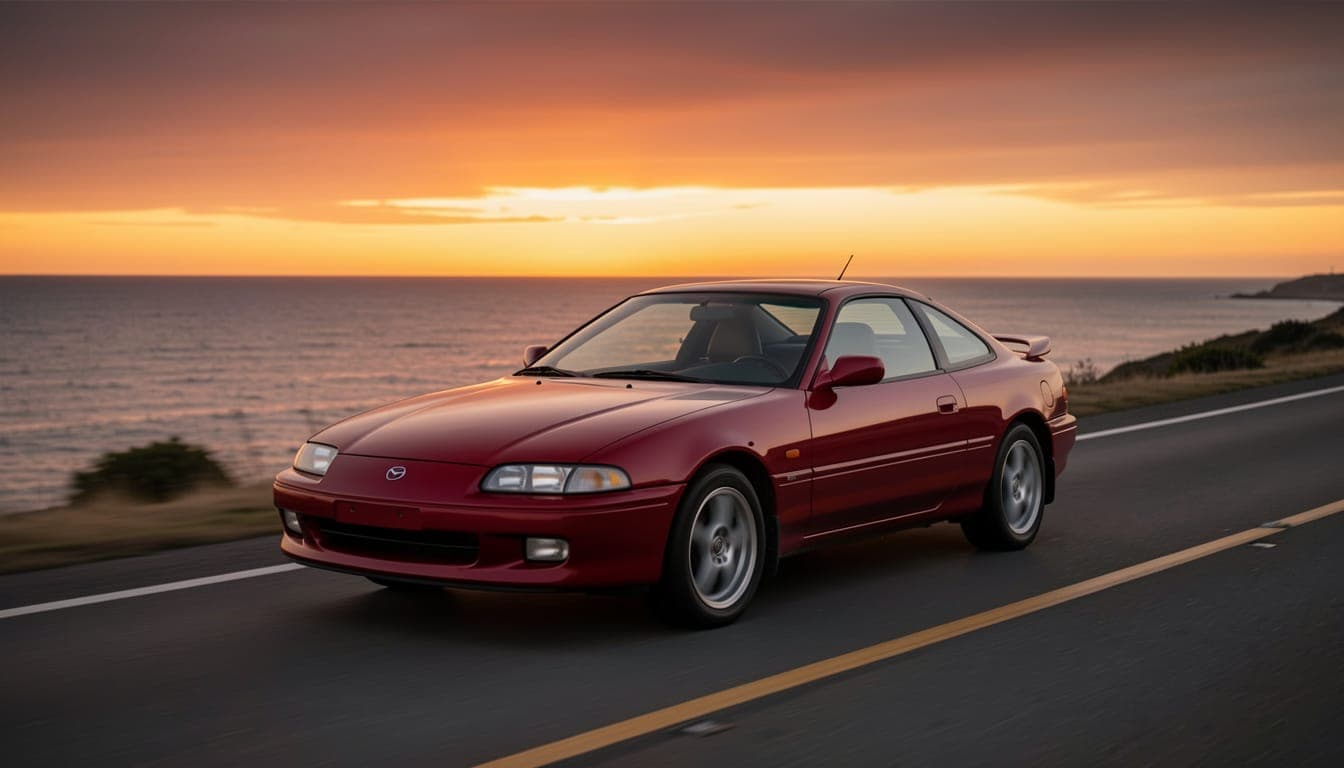
A pristine second-generation Mazda MX-6 coupe on a scenic coastal road
The Forgotten Gem: Mazda MX-6
The Mazda MX-5 Miata is a legend. The Mazda RX-7 is an icon. The Mazda MX-6 is… a car that most people have forgotten ever existed. It was the middle child of Mazda's 1990s lineup, squeezed between the affordable fun of the MX-5 and the high-performance rotary of the RX-7.
This is the story of a car that was good at everything but great at nothing. A car that suffered from awkward market positioning. A car that, despite its qualities, was a mid-pack model in a segment that had seen better days.
"The MX-6 was a brisk coupe that looked reasonably cool, instead of a performance car that made a driving enthusiast's heart skip a few beats."
The Story of the MX-6
The MX-6 was part of a larger story of collaboration between Mazda and Ford. The Ford Probe, which almost became a Mustang replacement, shared its underpinnings with the MX-6. This platform-sharing produced two very different cars, but the Probe often overshadowed its Japanese cousin.
The MX-6 was introduced in 1987 as a stylish two-door coupe that was meant to capture the hearts of buyers who wanted something sporty but practical. It was a car that could take you to work during the week and on a spirited drive through the mountains on the weekend.
The First Generation (1987-1991)
The first-generation MX-6 was a car of its time. It featured blister fenders, pop-up headlights, and a sleek, aerodynamic profile. It looked fast, even if it wasn't always.
Under the hood, buyers could choose between a 2.2-liter four-cylinder or, for those who wanted more performance, a 2.2-liter turbocharged inline-four producing 145 horsepower and 190 lb-ft of torque. This was the MX-6 GT, and it was a genuine sleeper.
Mazda packed the MX-6 with technology that was impressive for its day. The Auto Adjusting Suspension (AAS) offered three settings: soft, normal, and sport. Later models offered optional four-wheel steering, a feature that was rare in any car at the time, let alone a mid-range coupe.
First Generation MX-6 (1987-1991)
- Engine: 2.2L I4, 2.2L Turbo I4
- Power: 145 hp (Turbo)
- Torque: 190 lb-ft
- Drive: Front-wheel drive
- Notable Tech: Four-wheel steering, AAS suspension
Second Generation MX-6 (1991-1997)
- Engine: 2.5L V6
- Power: 163-167 hp
- Weight: 2,699 lbs
- Drive: Front-wheel drive
- Notable Feature: Mazdaspeed A-Spec bodykit
The Second Generation (1991-1997)
In 1991, the MX-6 was completely redesigned. The pop-up headlights were gone, replaced by a sleek, aerodynamic shape that was inspired by the Alfa Romeo Giulia GTV. It was a car that looked elegant and timeless, a design that still holds up today.
Under the hood, Mazda made a significant change. The turbocharged four-cylinder was replaced by a 2.5-liter V6 producing between 163 and 167 horsepower. The V6 was praised for its smoothness and refined character. It wasn't the most powerful engine in its class, but it was one of the most civilized.
The second-generation MX-6 was also lighter than many of its competitors. At just 2,699 pounds, it weighed less than the Toyota Celica, Honda Prelude, and Nissan 240SX. That lightness gave it a nimble, responsive feel that made it a joy to drive on twisty roads.
Mazda offered a 5-speed manual transmission or a 4-speed automatic. In some markets, the four-wheel steering system was also available, making the MX-6 one of the most technologically advanced cars in its class.
For enthusiasts who wanted more, Mazdaspeed offered an "A-Spec" bodykit that included a massive rear wing, lower suspension, and RAYS wheels. It was a car that looked the part, even if it wasn't the fastest thing on the road.
"It was a slippery and elegant shape that still looks good 30 years later."
Why It Failed
The MX-6 faced three major challenges.
Awkward Market Position
The MX-6 was positioned above the MX-3 but below the RX-7. It was a grand tourer in a market that wanted sports cars. Buyers who wanted performance bought the RX-7. Buyers who wanted affordability bought the MX-3 or the Miata.
The 1990s Shift
The 1990s saw a sharp decline in coupe sales. Buyers were shifting away from two-door cars towards SUVs and trucks. The MX-6 was a victim of changing consumer preferences. It was a car that was born at the wrong time.
The RX-7 Effect
In 1992, Mazda introduced the third-generation RX-7 with 255 horsepower and a 0-60 mph time of under 5 seconds. It made the MX-6 look underpowered by comparison. Why buy a V6 coupe with 167 horsepower when you could buy a twin-turbo rotary legend?
Why It Matters Now
The MX-6 represents a time when affordable sports coupes were plentiful. It was a car that offered style, performance, and reliability at a price that was accessible to average buyers.
The second-generation MX-6 was praised for its clean, timeless design. It was a "slippery and elegant shape" that still looks good 30 years later. The V6 engine was one of the best in its class, and the chassis was well-balanced and engaging.
The MX-6 is also surprisingly reliable. Owners report high mileage with few major issues. One owner reported over 500,000 miles on their MX-6. That is a testament to the quality of Mazda's engineering.
Prices for well-preserved MX-6s are still relatively affordable, ranging from $2,100 to $12,750 depending on condition and mileage. It is one of the last affordable classic cars.
The Verdict
The Mazda MX-6 is a forgotten gem. It is not the fastest car, the most exciting car, or the most charismatic car. But it is a car that did almost everything well. It is a comfortable cruiser with a smooth V6, elegant styling, and surprising reliability.
Who Should Buy One:
- Drivers looking for a unique, affordable classic
- Enthusiasts who appreciate 1990s Japanese engineering
- Anyone who wants a car that stands out from the crowd
The Bottom Line:
The MX-6 is not a car that will set your heart on fire. But it is a car that will make you smile. And sometimes, that is enough.
You might also like:
- The 10 Most Controversial Cars Ever Made — And Why They're Still Loved
- The Strangest Things Ever Left in an Uber
- Sedan Showdown: 2026 Honda Accord vs. Toyota Camry
Disclaimer: This article is for informational and entertainment purposes only. Prices and specifications are subject to change. The author is not affiliated with Mazda or its subsidiaries.
Drift Team
Automotive historians and classic car enthusiasts