Life Is Measured in Achievement: The Story of Bruce McLaren
He spent three years in a hospital bed. His legs were in plaster. He walked with a limp for the rest of his life. Then he built one of the greatest racing teams in history.
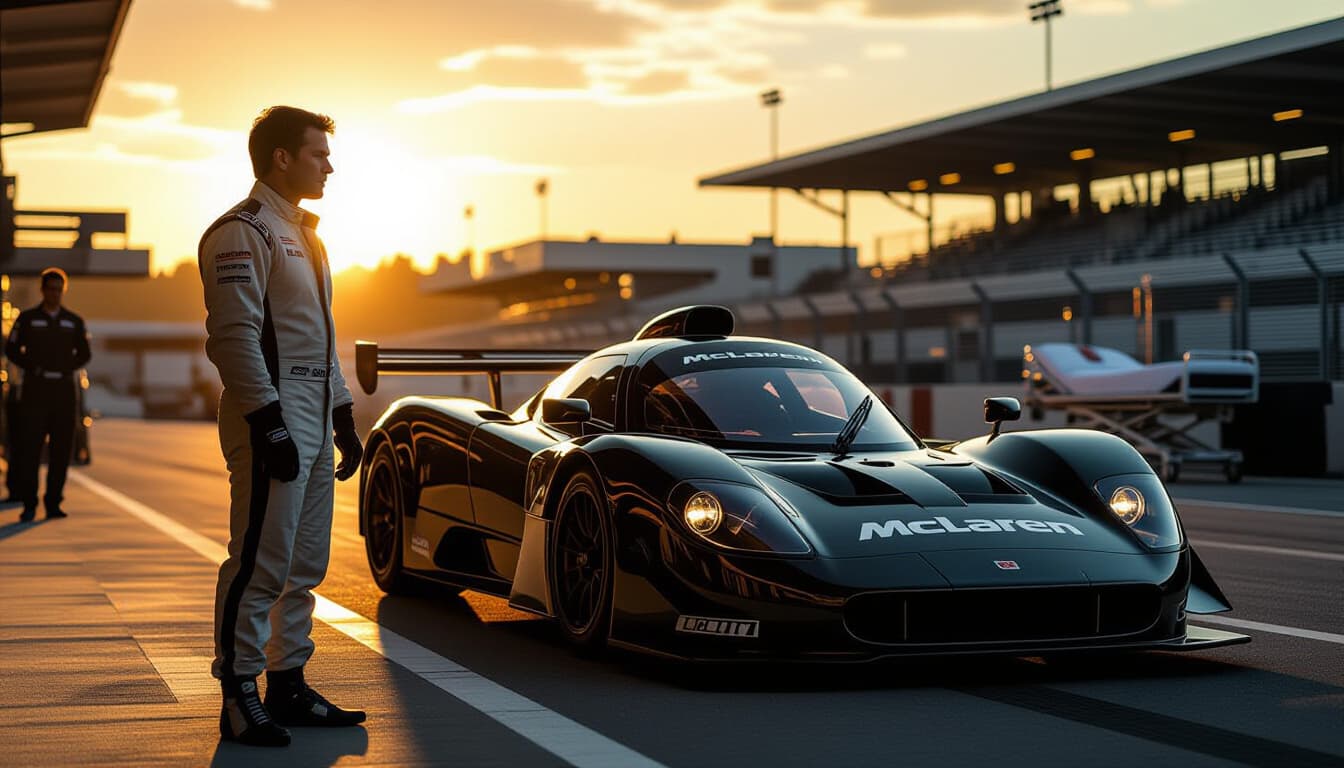
A dramatic shot of Bruce McLaren in his racing suit, standing beside a McLaren Can-Am car in the pits
Life Is Measured in Achievement: The Story of Bruce McLaren
He spent three years in a hospital bed. His legs were in plaster. He walked with a limp for the rest of his life.
And then he built one of the greatest racing teams in history.
This is the story of Bruce McLaren. A boy from Auckland who was told his body would never let him race. A man who proved the doctors wrong, then proved the world wrong, then built a legacy that outlived him by more than half a century.
He wrote: "Life is measured in achievement, not in years alone."
He was 32 when he died. He achieved more in those 32 years than most people achieve in a lifetime.
The Boy Who Couldn't Walk
Bruce McLaren was born in Auckland, New Zealand, in 1937. His father ran a garage. The family was not wealthy, but they were comfortable. Bruce had a normal childhood, until he was nine years old.
That was when he was diagnosed with Perthes' disease, a hip disorder that affects the blood supply to the ball of the hip joint. The treatment was brutal. He was put in traction. His legs were encased in plaster. He spent years in a hospital bed, unable to walk, unable to play, unable to do the things that boys do.
Most children who suffer from Perthes' disease recover fully. Bruce did not. The disease left him with a permanent limp. His legs were never quite right. He would walk with a slight drag in his step for the rest of his life.
But something else happened during those years in the hospital bed. Bruce developed a fierce determination. He watched the world from his bed and decided that he would not be defined by his disability. When he finally learned to walk again, he taught himself to drive.
He was 12 years old, driving his father's old Austin 7 around the backyard.
By 15, he was racing it on the beach at low tide.
The Unknown Who Conquered the World
In 1958, Bruce McLaren left New Zealand for Europe. He arrived virtually unknown. He had no connections, no sponsor, no reputation. He was just a young man with a limp and a dream.
A year later, at the age of 22, he won the United States Grand Prix. It was his first Formula 1 victory. It made him the youngest driver ever to win an international Grand Prix at the time.
He drove for Cooper, then for Ford. In 1966, he won the 24 Hours of Le Mans with Chris Amon, driving a Ford GT40. The victory was part of Ford's legendary 1-2-3 finish, the moment when Henry Ford II finally got his revenge on Enzo Ferrari.
Bruce was not just a driver. He was an engineer. He understood the machines he raced. He could feel what they were doing, diagnose their problems, and suggest solutions. He was the complete package.
The Team Builder
In 1963, Bruce founded Bruce McLaren Motor Racing. It was a small operation, run out of a workshop in England. Bruce designed the cars, engineered them, tested them, and raced them.
His cars dominated the Can-Am series. They won in Formula 1. They were fast, reliable, and beautifully built. Bruce had a gift for assembling talented people and giving them the freedom to do their best work.
There were very few like him. A driver who built his own machines. A racer who understood engineering. A leader who inspired loyalty.
The team was not just a business. It was an extension of Bruce's personality. It was curious, ambitious, and relentless.
June 2, 1970
On June 2, 1970, Bruce was testing a new Can-Am car at Goodwood. The car was the M8D, a powerful, aerodynamic machine designed to dominate the series.
The car lost its rear bodywork at over 170 mph. It spun into an earth bank. Bruce was killed instantly. He was 32 years old.
His wife Patricia and his daughter Amanda lost a husband and a father. The racing world lost one of its brightest stars.
The team he built refused to die. They dragged themselves back into the factory and rebuilt in his name. They raced on. They won on. They became the most successful team in Formula 1 history.
The Legacy
Today, McLaren has won more Formula 1 races than any team in history. It has won the constructors' championship multiple times. It has produced some of the greatest cars ever built, both on the track and on the road.
The name Bruce McLaren started is now a legend.
But the legacy is not just about trophies. It is about a philosophy. Bruce believed that racing was not just about winning. It was about pushing the limits, about innovation, about the relentless pursuit of something better.
He wrote: "Life is measured in achievement, not in years alone."
He was 32 when he died. He achieved more in those 32 years than most people achieve in a lifetime. He built a team that outlived him. He built a legacy that will never die.
He was a boy who couldn't walk. He became a man who taught the world how to fly.
You might also like:
- The Ford GT40: The Car That Conquered Ferrari
- The Ferrari F40: The Last Great Analogue Supercar
- The Jaguar E-Type: The Most Beautiful Car Ever Made
Disclaimer: This article is for informational and entertainment purposes only. All product names, logos, and brands are property of their respective owners. The views expressed are those of the author and do not necessarily reflect the official policy or position of any company mentioned.
Drift Team
Motorsport historians and McLaren enthusiasts