The Truth Teller vs. The Auto Industry: Why No One Is Saying Anything
A tech entrepreneur donated $10,000 to a struggling shop owner. An auto blogger called it 'courting attention.' The entrepreneur fired back with an ultimatum. And suddenly, the entire auto review industry went silent.
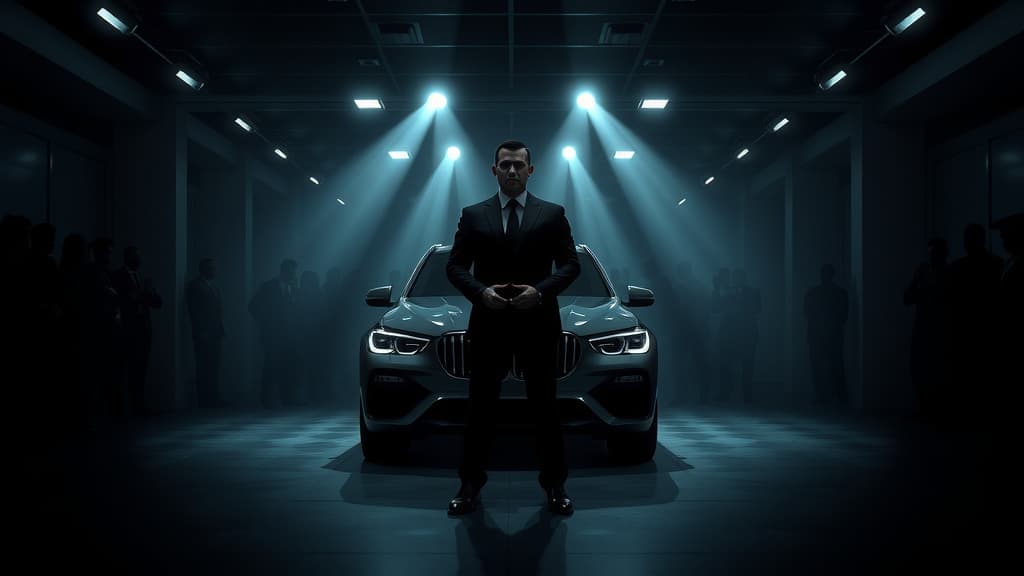
A dramatic showdown scene showing a bold figure standing alone against a group of shadowy figures in a modern auto showroom
The Truth Teller vs. The Auto Industry: Why No One Is Saying Anything
A tech entrepreneur donated $10,000 to a struggling shop owner. An auto blogger called it "courting attention." The entrepreneur fired back with an ultimatum that threatened to upend the entire auto review industry. And then, something remarkable happened.
Everyone went silent.
Not a single auto reviewer defended their colleague. Not one. The entire industry—bloggers, vloggers, influencers—stayed quiet while one of their own was publicly humiliated. The reason? They were terrified. Terrified of losing their income. Terrified of being exposed. Terrified that a truth-teller might finally reveal what everyone in the industry knows but refuses to admit: most car reviews are bought and paid for.
This is the story of how one man's donation exposed the dirty secret of automotive journalism.
The Donation That Started It All
In Hunan province, a small shop owner helped an elderly man who collapsed in her shop. She performed first aid. She called an ambulance. She did everything right. The man later died, and his family sued her for $10,000 in compensation. She eventually settled for $1,900.
The story spread online. People were outraged. A woman who had done the right thing was being punished for it.
Luo Yonghao, a controversial tech entrepreneur and former smartphone maker, saw the story and decided to act. Together with friends, he raised and donated $10,000 to the shop owner. It was a generous gesture, a way to support someone who had been treated unfairly.
Then the auto blogger weighed in.
The blogger, who goes by the handle "Chief Old Mechanic" and has approximately 950,000 followers, posted a message accusing Luo of "courting attention" and said "a celebrity is always a celebrity, everywhere."
The implication was clear: Luo had only donated to make himself look good.
The Ultimatum
Luo did not take the criticism quietly. He is not known for being quiet. He is known for being aggressive, confrontational, and brutally honest. He has built a career on saying what others are afraid to say.
His response was swift and devastating. He called the blogger a "pure rogue and scoundrel" and issued an ultimatum: if the blogger did not apologize and delete his post by noon the next day, Luo would become an auto reviewer himself.
But not just any auto reviewer. He promised to "never tell a lie" and specifically focus on the quality issues of the car brands that sponsor the blogger. His exact words: "I will never tell a lie, but I might make some people's lives miserable."
The threat was clear. Luo was going to expose the cozy relationship between auto reviewers and the automakers who pay them.
The "Red Envelope" Accusation
The blogger initially responded by listing two car brands he had recently covered, daring Luo to scrutinize them. It was a deflection, an attempt to redirect attention away from himself and toward the automakers.
Luo saw right through it. He asked a devastating question: "You took red envelope travel fees for attending that press conference, didn't you?"
In the Chinese auto review industry, "red envelope" payments are an open secret. Automakers give reviewers money, gifts, and perks in exchange for favorable coverage. It is not called a bribe. It is called "travel fees," "sponsorship," or "media support." But everyone knows what it really is.
Luo then argued that the blogger was not trying to protect his reputation. He was trying to protect his income. By directing attention to the brands, he was hoping to save his relationship with them.
The Apology That Wasn't
The blogger caved before the deadline. He posted an apology, but it was weak and non-apologetic. He wrote: "Living in a time of peace but feeling like I'm in the line of fire."
Luo immediately rejected the apology as insincere. His response was cutting: "You're not afraid of my response; you're afraid your masters who keep you will pull out to avoid the fire."
The message was clear. The blogger was not afraid of Luo. He was afraid of losing his income from automakers. He was afraid of being exposed as a paid shill. He was afraid that the truth teller would reveal what everyone in the industry already knows.
The Silence
This is where the story takes its most damning turn.
Not a single auto reviewer defended their colleague.
No one spoke up for the blogger. No one condemned Luo. No one said anything at all. The entire auto review industry—bloggers, vloggers, influencers, content creators—stayed completely silent.
Why? The answer is simple: they all share the same business model.
Top auto reviewers earn hundreds of thousands of dollars per video from automakers. They are not independent reviewers. They are effectively an advertising arm for the car companies. Their income depends on maintaining good relationships with the brands they cover.
If they defended the blogger, they risked alienating the automakers who pay their bills. If they condemned Luo, they risked being seen as supporting a bully. If they spoke out at all, they risked having their own conflicts of interest exposed.
So they stayed quiet. They hoped the controversy would blow over. They hoped no one would notice their silence. They hoped that the truth teller would move on to something else.
But everyone noticed.
Why This Matters
This story is not just about a fight between two people on the internet. It is about the collapse of trust in automotive media.
Consumers rely on reviews to make informed decisions. They watch videos, read articles, and follow influencers to learn which cars are good and which cars are bad. But if those reviews are bought and paid for, they are worthless. They are not reviews. They are advertisements disguised as editorial content.
The problem is not new. It has been going on for years. But it has gotten worse as the auto industry has become more competitive. Automakers are desperate for positive coverage, and they are willing to pay for it. Reviewers are desperate for income, and they are willing to sell their integrity.
The result is a system that serves automakers and reviewers but does not serve consumers.
The Broader Context
This controversy comes at a time when the Chinese government is cracking down on automotive media. The state broadcaster recently reported on a crackdown on more than 9,000 auto accounts that spread misinformation, distorted policies, and engaged in malicious marketing.
The government is investigating the corruption in auto media. They are aware that the system is broken. They are taking steps to fix it.
But government action alone is not enough. The auto review industry needs to reform itself. It needs to adopt transparent sponsorship practices. It needs to separate editorial content from paid promotions. It needs to rebuild trust with consumers.
What Happens Next?
Luo has not yet followed through on his threat to become an auto reviewer. But the door is open. He could start reviewing cars at any time. And if he does, he will be watching. He will be watching the reviewers. He will be watching the automakers. He will be watching for the lies and the corruption that he has already exposed.
The auto review industry is on notice. The silence is over. The truth is coming.
The Bottom Line
A tech entrepreneur donated $10,000 to a struggling shop owner. An auto blogger called it "courting attention." The entrepreneur fired back with an ultimatum that threatened to upend the entire auto review industry. And everyone went silent.
The silence is the story. It is the confession. It is the proof that the industry has something to hide.
Consumers deserve better. They deserve honest reviews. They deserve independent voices. They deserve to know the truth about the cars they are buying.
The truth teller has spoken. Now it is time for the industry to listen.
You might also like:
- Mercedes-Benz and BMW Just Called Out the Entire EV Industry
- Top 10 Most Reliable Cars of 2026
- The Ultimate Used Car Buying Guide for 2026
Disclaimer: This article is for informational purposes only. The views expressed are those of the author and do not necessarily reflect the official policy or position of any company mentioned.
Drift Team
Automotive industry analysts and consumer advocates