The Legend That Wouldn't Die: The Tucker 48
The Tucker 48 was the car of tomorrow—a revolutionary vehicle packed with innovations decades ahead of its time. But its story is a cautionary tale of ambition, corporate warfare, and the fragility of the American Dream.
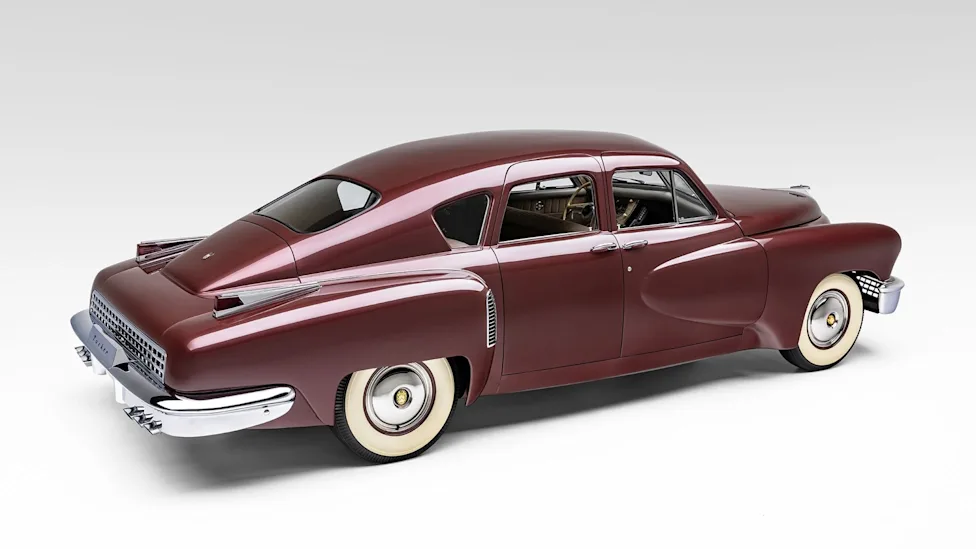
The rear end of a pristine 1948 Tucker 48 sedan
The Legend That Wouldn't Die: The Tucker 48
In the late 1940s, the American automobile industry was stale. Detroit was churning out warmed-over versions of pre-war designs, and the public was hungry for something new. Then came Preston Tucker, a charismatic salesman with a bold vision: a revolutionary car that would change everything.
The Tucker 48 was introduced on July 17, 1947, and it was unlike anything anyone had ever seen. It featured a rear-mounted engine, a "Cyclops Eye" center headlight that turned with the wheels, a padded dashboard, a pop-out windshield, and a perimeter frame for crash protection. The car was a sensation, drawing crowds wherever it appeared. One report says Tucker was even pulled over by a police officer who just wanted a closer look.
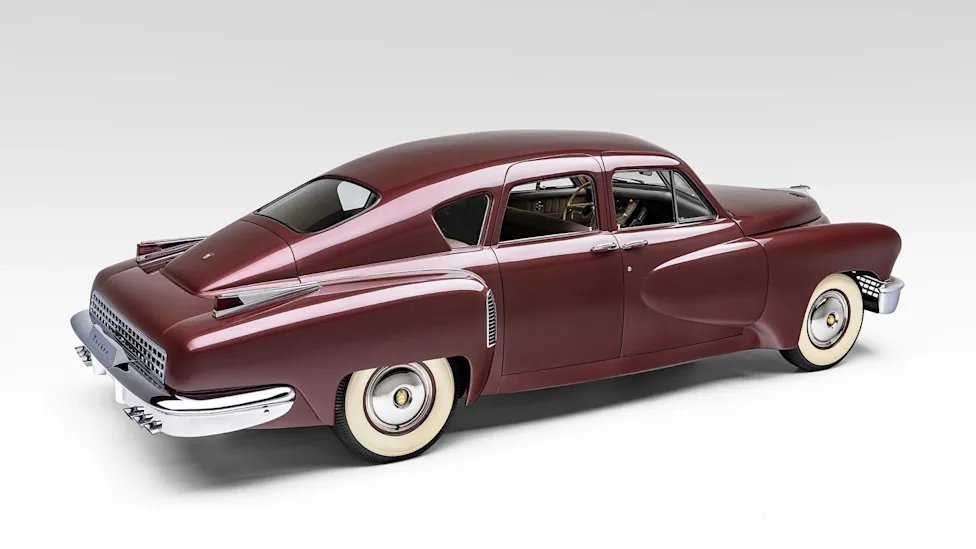 1948 Tucker 48 - Image courtesy of Broad Arrow Auctions via Yahoo Autos
Image courtesy of Broad Arrow Auctions via Yahoo Autos
The Tucker 48 remains a rolling symbol of the American dream, as well as one of the most advanced, early post-war automobiles. But its story is not just about engineering—it is a cautionary tale of ambition, corporate warfare, and the fragility of the American Dream.
The Visionary: Who Was Preston Tucker?
Preston Tucker was not a typical automaker. He was a salesman, an inventor, and a dreamer. He had been an office boy at Cadillac, a policeman, and a sales manager. He had worked with legendary engine builder Harry Miller on race cars and developed a gun turret used in World War II.
After the war, the auto industry was reeling. Having spent years building weapons, the car companies had not made any new cars for years. Tucker saw a gap in the market and decided to fill it with something extraordinary.
He promised a car that would be safer, faster, and more technologically advanced than anything on the road. The price was initially advertised at $1,000, though it would eventually balloon to around $4,000.
The Innovation: Why the Tucker 48 Was Decades Ahead
The Tucker 48 was packed with features that were years ahead of their time.
Rear-Engine, Rear-Wheel Drive: A first for an American car.
The "Cyclops Eye" Headlight: A third headlight in the center of the grille that turned with the steering wheel to illuminate corners. It was so controversial that more than a dozen states had banned cars with more than two headlights, so Tucker created a cover for it.
Safety Innovations: A padded dashboard, a pop-out windshield designed to protect passengers in a crash, a perimeter frame for crash protection, and an integrated roll bar.
Crash Compartment: The car featured a wide space under the dash where front-seat passengers could duck before a collision.
Disc Brakes: A feature that was not common on American cars at the time.
Torsilastic Suspension: An independent rubber-sprung suspension system.
Not all of the innovations made it to production. The original 589 cubic-inch engine and direct torque converter drive proved impractical. Tucker purchased Air Cooled Motors and modified their Franklin helicopter engine for the car, and used a Cord 810/812 preselector transmission. The gearbox was a unique driving experience, requiring the driver to select a gear on the steering column and then press a clutch pedal to engage it.
The Conspiracy: The Big Three and the SEC
This is the central conflict of the story—the part that makes it a conspiracy thriller.
Tucker's innovative fundraising methods, such as selling dealership rights and accessories for a car that did not yet exist, attracted the attention of the U.S. Securities and Exchange Commission. The SEC raided the Tucker plant on May 28, 1948, forcing him to cease production and lay off 1,600 employees.
Steve Lehto, author of the definitive Tucker book, uncovered that a top SEC official, Harry McDonald, leaked the investigation to the press. McDonald was from Detroit and had ties to the Big Three. Tucker himself believed that Senator Homer Ferguson of Michigan was behind the conspiracy.
On June 6, 1948, muckraking journalist Drew Pearson told his radio audience that the SEC investigation would "blow Tucker higher than a kite." Four days later, his column declared "the ax is falling" on Tucker.
Historical evidence suggests that the demise of the Tucker Corporation was the result of two problems. First, the company's lack of financial planning led to continual crises. Second, unable to sell additional stock or dealerships, the Tucker Corporation needed money to start producing cars.
The Trial: A Hollow Victory
In October 1949, Tucker and seven associates stood trial in Chicago for 31 counts of fraud. The prosecution argued that the Tucker Corporation was a sham and that Tucker never intended to build the car. Tucker's defense argued that the company had built a plant and hired employees, proving its intent.
After 28 hours of deliberation, the jury acquitted Tucker on all charges. But it was a hollow victory. The company was bankrupt, the plant was closed, and the dream was dead.
Even Henry Ford failed the first time out, Tucker said after his acquittal.
The Legacy: The Crown Jewel of Collectors
Only 51 Tuckers were ever built, and fewer than 50 survive today. They are among the rarest and most valuable collector cars in the world, regularly selling for over $1 million at auction.
The 1988 film "Tucker: The Man and His Dream," directed by Francis Ford Coppola and starring Jeff Bridges, introduced the story to a new generation. Coppola was once the owner of one of the Tuckers used in the film.
The Tucker 48 remains a symbol of American ingenuity, ambition, and the idea that one person can take on the establishment. It is a story about a car that was too good to exist, a man who dared to dream too big, and the forces that conspired to bring him down.
You might also like:
- The Forgotten Gem: Mazda MX-6
- The 10 Most Controversial Cars Ever Made — And Why They're Still Loved
- Volkswagen's Historic Crisis: 100,000 Jobs and Four Factories at Risk
Disclaimer: This article is for informational and entertainment purposes only. The views expressed are those of the authors and do not constitute financial or investment advice. Banner image courtesy of Broad Arrow Auctions via Yahoo Autos.
Drift Team
Automotive historians and classic car enthusiasts