The Legendary Porsche 959: The Car That Almost Bankrupted Porsche
Too expensive to develop, too complicated to build, and nearly bankrupted the company. The Porsche 959 is a legend that shouldn't have existed.
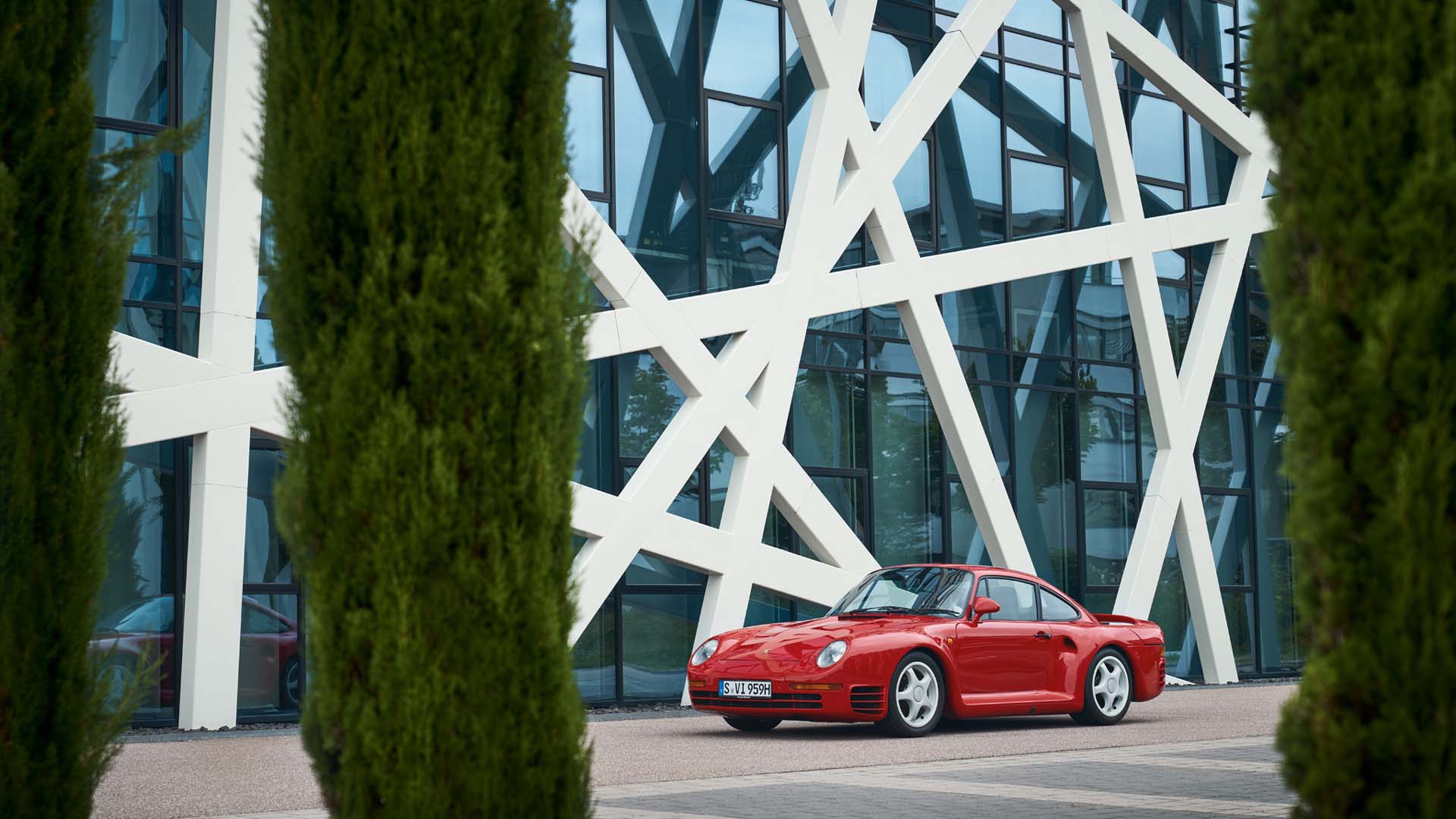
A pristine Porsche 959 supercar on a scenic road
The Legendary Porsche 959: The Car That Almost Bankrupted Porsche
In the early 1980s, Porsche was at a crossroads. The 911, the car that defined the brand, was aging. The company had invested heavily in front-engined models like the 928 and 944, with the ultimate goal of phasing out the rear-engined 911 entirely.
But a group of engineers refused to let the 911 die. Led by Helmut Bott, Porsche's head of research and development, they set out to create the ultimate rear-engined sports car—a machine so advanced it would prove the 911 platform still had a future.
The result was the Porsche 959. It was a car that pushed the boundaries of what was technically possible, featuring twin-turbocharged power, advanced all-wheel drive, and a body made from exotic materials. It became the fastest production car in the world and set a new standard for automotive technology.
But it nearly bankrupted Porsche in the process.
"The 959 was the most expensive promotional gift Porsche has ever given its customers." — Helmuth Bott, Porsche Head of R&D
Born from Motorsport: The Group B Connection
The 959's origins lie in the golden era of rallying. In 1982, the FIA introduced Group B regulations, creating one of the most spectacular and dangerous eras in motorsport history. The rules required manufacturers to build at least 200 road-legal versions of their competition cars to qualify for the series.
Porsche began development of what would become the 959 in 1981, with the goal of competing in the World Rally Championship. The company showed a prototype called the "Gruppe B" at the 1983 Frankfurt Motor Show, which combined technologies that were considered visionary even years later: electronically controlled all-wheel drive, a self-supporting body made of light sheet steel with plastic add-on parts, and a 2.85-liter six-cylinder boxer engine with bi-turbocharging.
Porsche needed to build 200 road cars to qualify for competition. Before they could fully compete, however, the FIA cancelled Group B regulations in 1986 following a series of fatal accidents. The 959 was left without a racing program, and Porsche was stuck with a car it had spent millions developing.
The Paris-Dakar Triumph
Despite the Group B cancellation, the 959 still proved its worth in competition. In 1986, three 959s entered the grueling Paris-Dakar Rally, taking first, second, and sixth places. The victory was a stunning achievement for a car that had been developed primarily for tarmac racing.
The Technology: Decades Ahead of Its Time
At the heart of the 959 was a 2.85-liter flat-six engine that drew inspiration from Porsche's 935/78 Le Mans racer, nicknamed "Moby Dick." It featured water-cooled cylinder heads mated to an air-cooled block—a hybrid design that was unusual for the time.
The engine was equipped with sequential twin turbochargers, with a smaller turbo providing boost at low revs and a larger one taking over higher up the rev range. This system virtually eliminated turbo lag, a common problem with early turbocharged cars.
| Specification | Detail |
|---|---|
| Power | 444–450 hp at 6,500 rpm |
| Torque | 369 lb-ft at 5,000 rpm |
| 0-62 mph | 3.7 seconds |
| Top Speed | 197 mph (315 km/h) |
The All-Wheel-Drive System
Porsche's "Porsche-Steuer Kupplung" (PSK) system was one of the most advanced all-wheel-drive systems of its era. Using sensors at each wheel, the computer-controlled system could split torque between the front and rear axles as needed—from a 50:50 split in slippery conditions to up to 80% sent to the rear wheels under hard acceleration.
The Suspension
The 959's suspension was a radical departure from the 911's MacPherson strut and semi-trailing arm setup. It used double wishbones at each corner, with two electronically adjustable dampers per wheel—one controlling ride firmness, the other managing ride height. The driver could choose from three settings, with the firmest and lowest settings automatically selected at speed.
The Body
While the 959 shared its roofline and glass with the 911, its body was constructed from advanced materials:
- Aluminum for doors and front boot lid
- Kevlar and fiberglass-reinforced epoxy resin for other panels
- Polyurethane integral foam for the front spoiler
The aerodynamic design achieved a drag coefficient of just 0.31, with an integrated rear wing and a fully panelled underbody that eliminated lift even at high speeds.
Other Innovations
- Hollow-spoke magnesium wheels with run-flat tires
- Tire pressure monitoring system—a first for a production car
- ABS brakes
- Self-leveling suspension that adapted to vehicle speed
"The 959 was so far ahead of its time that it took the rest of the industry a decade to catch up." — Automotive Historian
The Production: A Limited Run for the Few
The 959's development took longer than expected. Customer deliveries didn't begin until late 1987, two years behind schedule. The cars were offered in two variants:
Komfort: The road-oriented version with air conditioning, power windows and seats, rear seats, and sound insulation.
Sport: A stripped-down version that omitted luxury features and weighed 110 pounds less.
| Variant | Production |
|---|---|
| Komfort | ~200 units |
| Sport | ~29 units |
| Other variants | ~63 units |
| Total | 292 units |
The Price
The 959 was priced at approximately 420,000 Deutsch Marks (around £140,000 at the time). But Porsche reportedly spent over 1 million Deutsch Marks developing each car, leading to Helmuth Bott's famous comment that the 959 was "the most expensive promotional gift Porsche has ever given its customers."
The car was soon trading on the open market for more than double its list price.
The American Outlaw: The "Show or Display" Law
The 959 was never approved for sale in the United States. Porsche didn't submit the car for federalization, and it was effectively banned from American roads.
But a 1999 regulation, the "Show or Display" law, allowed a limited number of exotic cars to be imported for exhibition or display purposes. Under this law, owners could drive their 959s for up to 2,500 miles per year, but only for "show or display" purposes—not as daily drivers.
The 959 was one of the first cars to be approved under this regulation, allowing a few examples to make their way to the U.S. legally.
The Canepa Effect
One of the most famous 959 owners is Bruce Canepa, a Porsche specialist who has modified several 959s with modern upgrades while preserving their original appearance. His "Sport Canepa" upgrades include titanium coil-over suspension, modern tires, and audio system upgrades, making the cars more drivable while maintaining their value.
The Legacy: A Car That Defined a Generation
The 959's legacy extends far beyond its production run. It was a precursor to the 911 Turbo, but more importantly, it was a technological pioneer that shaped Porsche's future.
- All-Wheel Drive: The PSK system laid the groundwork for the all-wheel-drive systems that would become a staple of the 911 range.
- Turbocharging: The sequential turbo design influenced countless turbocharged engines that followed.
- Advanced Materials: The use of Kevlar and aluminum foreshadowed the lightweight materials that would become common in supercars.
- Electronic Control: The computer-controlled systems were a precursor to the sophisticated electronics that now manage every aspect of modern cars.
The 959 is widely regarded as the grandfather of the modern all-wheel-drive supercar. It proved that a car could combine motorsports-grade performance, luxury car comfort, and everyday drivability in a single package.
The Market: The 959 as an Investment
The 959 has become one of the most sought-after collector cars in the world. Values have climbed significantly, with top-tier examples fetching record prices.
| Variant | Recent Auction Price |
|---|---|
| 959 Sport | $5,500,000 |
| 959 Komfort | $2,535,000 (January 2026) |
| 959 Komfort (1988) | $1,450,000 (Good condition) |
In 2026, a 959 Sport sold for $5.5 million at Broad Arrow's Amelia Island auction, setting a new record for the model and proving that the market is finally catching up with the 959's historical importance.
A Legend That Endures
The Porsche 959 was a car that pushed the boundaries of what was possible. It was born from a desire to save the 911, built to dominate the world's toughest rally stages, and ultimately became a technological tour de force that redefined the supercar.
The 959 was not just a car; it was a statement. A statement that Porsche could build the world's most advanced automobile—and that the 911 platform still had a future.
Today, the 959 is recognized as one of the most significant cars ever built. It's a symbol of engineering excellence, a testament to what happens when a company dares to push the limits, and a reminder that sometimes the greatest innovations come from the most unlikely circumstances.
You might also like:
- The Forgotten Gem: Mazda MX-6
- The Legend That Wouldn't Die: The Tucker 48
- The 10 Most Controversial Cars Ever Made
Disclaimer: This article is for informational and entertainment purposes only. Prices and specifications are subject to change. The author is not affiliated with Porsche or its subsidiaries.
Drift Team
Automotive historians and classic car enthusiasts